Concrete cracks are a common and painful problem in the construction field. In order to understand and respond effectively to this phenomenon, this paper will examine in detail the multiple causes of concrete cracks and the corresponding control measures. Through these discussions, we look forward to better prevention and disposal of concrete cracks and to ensuring the quality and safety of buildings。
01 cement crack causal analysis
Concrete cracks often originate from multiple factors. In the course of the construction work, if the construction process is not strictly controlled, it is highly likely to lead to cracks. At the same time, the problem of raw materials, the irrationality of the matching and the neglect of on-site management are all the triggers of cracks. An in-depth analysis of these causes and the corresponding controls are essential to improve the quality of the works。
The issue of raw materials
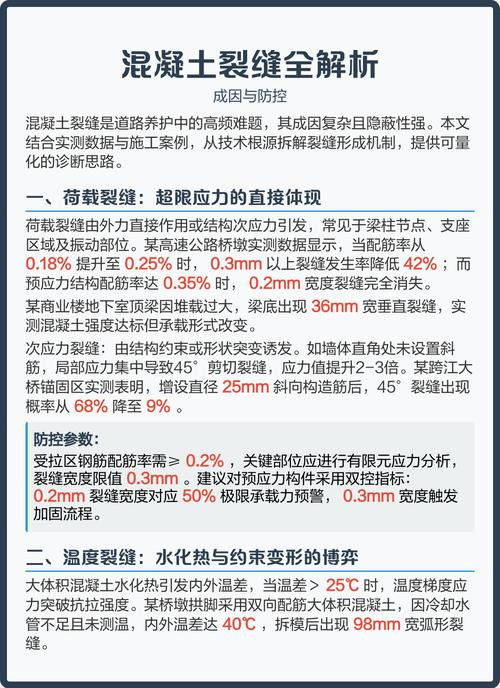
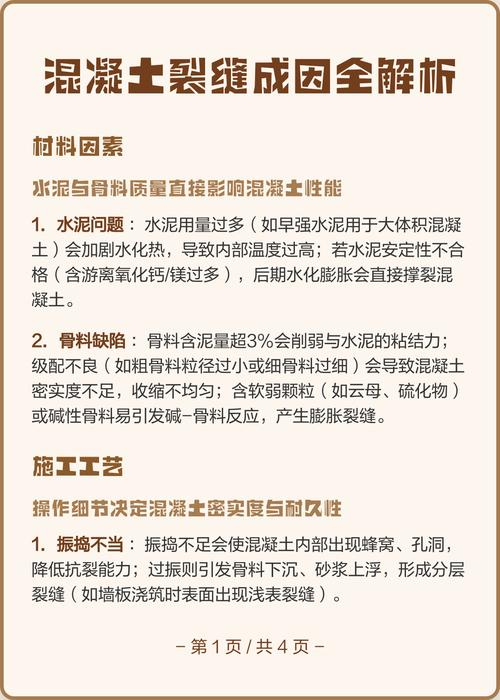
The inadequacy of raw materials is an important factor in the creation of cracks. In particular, the break in the grade of the coarse bone, the failure of the ultra-low track to meet the normative requirements, and the excessive amount of mud, all trigger the contraction of concrete, which in turn creates cracks. In addition, the type and quantity of concrete additives that are not commingled in proportion to the ratio increase the contraction of concrete. At the same time, failure to meet the requirements for the type and grade of cement can lead to the early contraction of concrete, thereby triggering cracks。
I don't think that's a good idea
During the co-design phase, excessive use of concrete on each side could lead to higher temperature within the concrete, thereby triggering temperature cracks. At the same time, too much water is designed to increase the collapse and variability of concrete, leading to early contractions。
Problems during construction
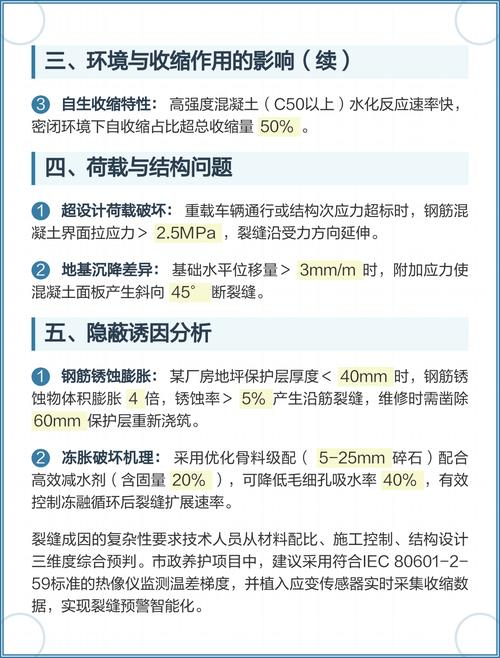
During concrete construction, there were a number of factors that could lead to cracks. First, failure by the construction staff to comply with the technical requirements for boosting and inappropriate placement and spacing of the blast rod could lead to a concrete leak or long shock, thereby affecting the quality of construction and causing cracks. Second, concrete mixing and lack of time can lead to uneven mixing, especially when mixed. In addition, the distance from the mixing building to the site and the length of transport lead to deterioration of concrete and ease, increasing the risk posed by cracks. Moreover, excessive breaks during the planting process could lead to cold stitches. At the same time, when concrete is completed, surface cracks can easily be created without enough plastering, at least three times. In addition, excessive wind speed and temperature at the construction site could lead to early dehydration of concrete, which could trigger constrictions. Finally, inadequate temperature maintenance or cooling measures at the time of construction result in a temperature gap between the inside and the outside of concrete and a temperature crack。
Frack control measure 02
During concrete construction, a range of measures are required to prevent and control the creation of cracks effectively. First, it is important to ensure that the construction personnel comply strictly with the technical requirements for vibrations, with reasonable control over the insertion position and spacing of the blowtorch, in order to avoid concrete leakages or long strokes. Second, there is a need to fully mix concrete to ensure sufficient mix and time, especially when blending in. In addition, the distance between the blending building and the site-filled site should be kept as short as possible and transport time intervals reduced to maintain good and easy concrete. At the same time, excessive breaks should be avoided during the planting process to reduce the generation of cold stitches. When construction is completed, full facial pressure is required, at least three times, to prevent surface cracks. In addition, attention needs to be paid to changes in wind speed and temperature at the construction site and to measures to prevent early dehydration and cracking of concrete. Finally, temperature-preservation or cooling measures should be reasonably applied to control temperature differences within and outside concrete to reduce the risk of temperature cracks。
Reasonable selection of material
In concrete construction, reasonable selection of materials is essential. First, appropriate cement varieties and grades should be selected on the basis of matching, while ensuring that the rough bones used are in conformity with the norms. The amount of mud, water and organic impurities in rough materials must be rigorously tested before use. In general, small and medium stones of fine sand and particle sizes are the preferred ones, in which the amount of mud contained in sand should be within 3 per cent and the amount of mud contained in small and medium stones should not exceed 1 per cent. In addition, strong tests of rock strength are required to ensure at least 60 mpa strength. For rough bones with a soil content exceeding the standard, they must be washed until they have been tested for use。
In addition, the use of additives requires caution. Only after a suitable mixing ratio has been determined in the concrete matching test. By optimizing the composition of concrete matching, it is possible to effectively reduce its hydro-heat, thereby reducing the creation of temperature cracks。
Well designed concrete matching
Detailed matching designs are carried out in accordance with the standards of the waterworker concrete compatibility design protocol, taking into account such characteristics as the level of concrete strength required for design, resistance to freezing, etc. To ensure the quality of concrete, the amount of water to be used should be within 170 kg/m3 and the glue ratio should not exceed 0. 60. At the same time, concrete and ease are further optimized through the addition of gas and water abatement agents。
Strict control of the construction process
Template installation and dismantling
The template selected for this project is a steel template whose strength, intensity and stability are required to meet the design requirements. Templates are fixed through scaffolding and wall-to-wall poles to ensure that the installation is robust and to prevent the template from moving. The sutures of the panels are sealed with tape to prevent concrete leaks, thereby affecting their homogeneity. The removal of the template is subject to the " construction code for the water and hydropower engineering template " (dl/t5110-2013) and related technical standards。
Concrete preparation
Commodity concrete is recommended as a priority. Where self-concrete is required, the raw materials should be rigorously tested, along with the equipment to be measured in the mixing building. Based on the suitability of the raw materials and quantity equipment, adjustments to the construction matching are made on the basis of the design matching, the water content of the raw materials and the ultra-lowness. The construction unit is required to develop a concrete and quality control system for the safety of the mixer operators and to document the process in detail。
Concrete transport
The transport of concrete by tankers keeps its mixing and material even. Before filling, ensure that the tank water is cleared. Because of the likely longer interval between site construction, the addition of additives to adjust concrete and ease requires rapid mixing, the timing of which is based on actual circumstances. It is strictly forbidden to pour water into concrete tankers。
Concrete construction
Before concrete is laid, the miscellaneous items in the template must be thoroughly cleaned and the size of the installation of the template, the shape of the steel band and the spacing, etc., carefully checked to ensure that they all meet the design requirements. Concrete construction can then take place. When boosting concrete, the impact of the bar on steel bars, templates and prefills should be minimized to prevent unnecessary damage. In a layered manner, the bar should be inserted into the lower layer of approximately 5 mm to ensure that concrete can form a whole and avoid creating cracks. In addition, the construction process should be continuous to ensure the quality of construction。
Once the construction has been completed, at least two grafts should be carried out prior to the initial concrete condensation, and plastic sheeting should be covered to keep it wet. In case of wind or high-temperature weather, composite earth membranes should be used to cover, thereby effectively reducing loss of concrete moisture and preventing dry cracks。
Concrete conservation
Concrete conservation is a key element in increasing its intensity. Whether or not the cover conservation should determine directly whether concrete can be fractured. It is therefore important to designate a dedicated person for concrete conservation and to establish a clear system of rewards and penalties to ensure accountability。
Experience and recommendations
In order to ensure the quality of concrete construction and to reduce the generation of cracks, it is proposed that a detailed and dedicated construction programme be developed prior to construction and submitted to the supervising owner for approval. The programme should be technically bottomed up at the project level and should ensure signature by both parties to ensure quality assurance of the technology bottom. During the construction process, the quality of raw materials, matching parameters and construction processes should be strictly controlled, while construction management should be strengthened to effectively prevent concrete cracks。
For large concrete panel structures, such as reservoir dams and reservoirs, concrete water is difficult to maintain owing to the extensive construction work. To ensure quality conservation, the wetting of the concrete surface can be maintained by covering the concrete surface with black-heart cotton and by installing drip belts. In addition, during the summer, concrete should be built in such a way as to avoid high temperatures and to opt for low early and late temperatures in order to prevent the production of dry cracks as a result of excessive water loss during high temperatures。