Hong kong shares are exchanged by china clearing house
Does the direct use of the renminbi in the accounts result in a loss of earnings or loss due to exchange rate fluctuations or an increase in losses? Yesterday, china clearinghouse announced that it would be solely responsible for the settlement of the exchange rate for all hong kong stock purchases, after which the total cost would be distributed to each investor who had entered into a deal on that date, using a unified exchange rate on the same day, rather than the exchange rate that had been widely circulated earlier, t+2 (two days after the deal). As a result of institutional transactions, such settlements are expected to reduce the cost of exchange for the dispersed individuals。
Point one: exchange rate determined on the day
A single exchange of remittances by chinese settlement companies has enabled investors to obtain preferential exchange rates applicable to institutions. In general, the exchange rate has a greater advantage over investors ' own swaps. China clearing co. Undertook not to charge any fees and not to earn a difference in remittances。
At present, the exchange costs of the exchange are distributed to each transaction on the basis of the “net exchange and full apportionment” principle, i. E., the date of the transaction (hereinafter referred to as “t-day”), the purchase and settlement exchange rates of the investor's purchases and sales settlement rates to be established by the chinese settlement company at the end of the day, in exchange for the exchange with the bank of all funds due to the local investor through the hong kong stock exchange and port unit at the end of the day. T+2 completed the transfer of funds from the t-day exchange transaction with the port stock clearing bank based on the exchange rate set above。
Point two: unanimous settlement
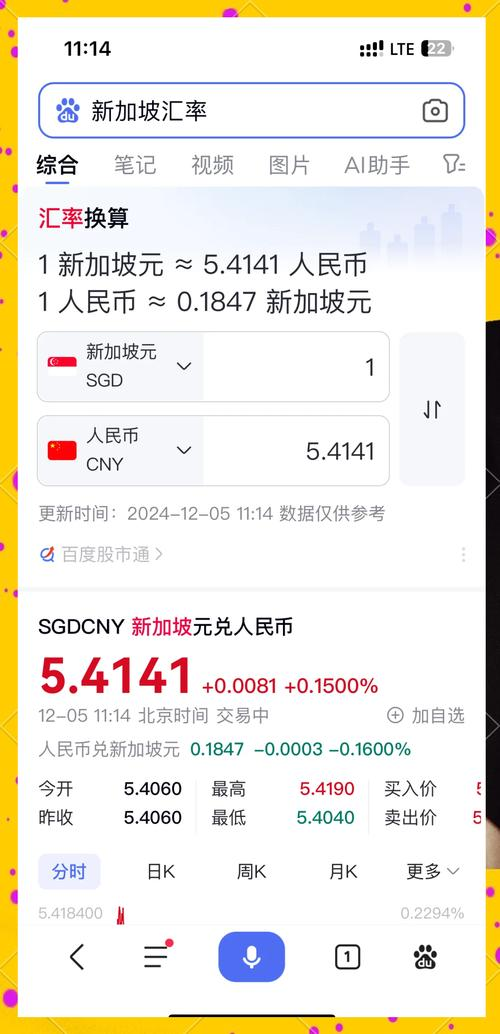
The chinese settlement indicated that its exchange rate would normally be better than the exchange rate of the investor's own exchange. In the case of 17 november, the actual settlement rate for the purchase of the shares by investors was 0. 79017 and for the sale of the shares was 0. 79143. The prices at the bank counter in the offshore market were 0. 7880, the sale price 0. 7910, and the prices at the offshore market were higher at 0. 7860 and the sale price 0. 793. As can be seen, the exchange rate for the sale of settlements on that day is 0. 1 per cent above the price of the counter, 0. 4 per cent above the price of the offshore counter, 0. 4 per cent above the price of the offshore counter and 0. 7 per cent above the price of the offshore counter。
It was informed that the factors affecting the cost of exchange among investors were the reference exchange rate intermediates at the date, settlement of the bank exchange rate quotations, the total amount of funds due and payable as a result of the investor-port exchange transactions at the date, and the net difference in funds receivable. In addition, the higher the net share of total funds receivable at that date, the greater the difference between the bank offer and the reference exchange rate intermediate, the greater the difference between the buy-in and sell-out exchange rates。
Point three: exchange rate fluctuations in offshore markets
Since hong kong stock exchange transactions are denominated in hong kong currency and are settled in renminbi, and domestic issuers exercise front-end control over investors, investors are required to pay the relevant funds in full and in advance. Therefore, prior reference exchange rates are required in hong kong equity operations, mainly for pre-freezing funds at the front end of the voucher transaction rather than for actual settlement. In order to avoid the settlement risk to the market arising from the exchange rate fluctuations of that date, it covers the largest single-day fluctuations in history and is currently valued at > 3 per cent of the current median price of the offshore market currency at the end of the day。
The actual exchange rate is based on the actual exchange rate of the net exchange at the end of the day and is based on the principle of full assessment of the sale and sale, and is generally higher than the reference rate mentioned above. That is, after end-of-day liquidation, the investor's port share buys a transaction in which the actual amount to be paid, calculated at the sale settlement exchange rate, will generally be less than the amount calculated by the securities firm on a daily basis at the sales reference price. Conversely, after the end-of-day liquidation, the investor's port shares sell transactions in which the actual availability of the renminbi is calculated at the buy-in exchange rate, generally exceeds the amount calculated by the securities firm in the day-to-day buy-in reference price。
However, the chinese settlement company has drawn the attention of investors to the possibility that, in extreme cases, when the offshore renminbi market fluctuates significantly, the settlement exchange rate may be lower than the reference exchange rate. As a result, investors need to pay timely attention to the offshore renminbi market and check the balance of the fund account to prevent overdrafts of the fund account。
Point four: every trade is traded
In accordance with the principle of exchange-rate exchange in port shares, if the same investor has a transaction to buy or sell in both directions on the same day, the exchange-rate ratio between the purchase and the sale must be applied simultaneously and accounted for in the same direction. This may result in some investors sharing the cost of exchange, even though there was a difference of zero。
The spread of exchange costs among each transaction rather than net investor-based spreads is due to the principle of “hong kong currency, renminbi settlement”. In other words, the fact that an investor buys assets (stocks) in hong kong currency and sells assets (stocks) in hong kong currency and receives the renminbi in hong kong currency has the logic of exchange, and an investor should share the full cost of the exchange in terms of buying/selling even if the difference is zero. Of course, it is also likely to benefit from the appreciation of the local currency。
Take as an example the first day of the opening of hong kong
The rate of exchange exchange between purchase and sale was 0. 79143 and 0. 79017 respectively. If an investor buys hk$ 10,000 (payable for hk$ 7901. 7) on the same day and sells a hk$ 10,000 (receivable for hk$ 7914. 3) on the same day, the investor earns 12. 6 yuan due to the appreciation of the currency。