Click on the blue word, and subscribe to the shed information for free
Real-time update of market menus (click to view)
I'll take it
Acre production increased by 62. 5 per cent
Acre profits increased by 132. 4 per cent
It's been applied nationwide for over a decade
I'm sorry.
The water in the fish pools is filtered and provided as “nutrient fluids” to vegetables, and the “spring” filtered by vegetables is fed back to the fish pools for fish growth. This is "symbiotic fish."。
With respect to agriculture, if you're still in the image of "face to the ground," then you're out. You can read the article after "charging"。
Fish symbiosis produces two different techniques for farming and planting, and co-symbiosis is achieved through sophisticated design, creating a “one-water double harvest”。
There is a special agricultural base in zhongdong town, qing po district, more than 50 kilometres from the centre of shanghai. The base area is more than 800 acres. The food here is not common in the earth, but in the pebbles, but a green, green and glamorous vegetable。
The fish here are not in the pool either, but in a giant drum in the shed, but the skin is oily and fat; the fish and vegetables here are close partners, helping each other, so the fish never need to change water and the vegetables never need to fertilizer。
This green and healthy “fish and vegetable symbiotic” model has made the founders of the army liu yong jun a fortune and sold 36 million a year。
In the united states, the symbiotic symbiosis of fish has a mature commercialized system, one of which is the deep-water training uvi system, which grows vegetables such as lettuce and mustard, while raising high-value fish such as tilapia and tilapia, which can produce more than 5 tons of tilapia and more than 100,000 vegetables per year
In australia, there is also a circular system that allows fish manure to be mineralized and returned to the full use of the system, to grow a variety of fish while growing vegetables and to maximize resource utilization and conservation...
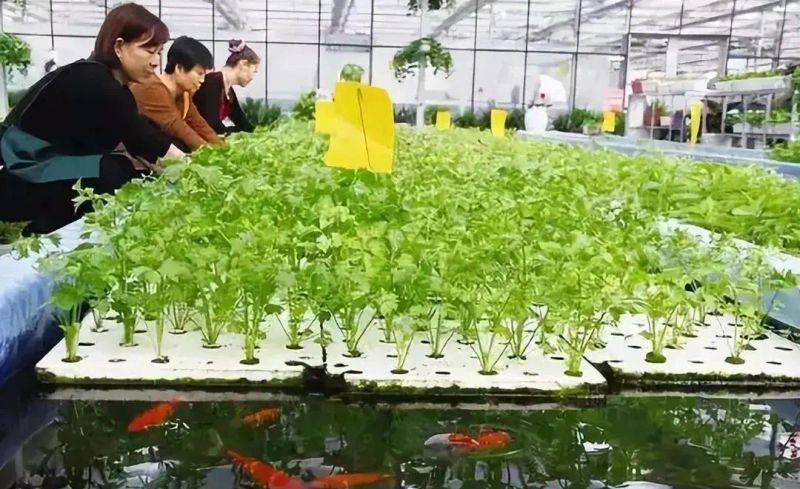
The symbiotic advantages of fish and vegetables can be seen in many ways, such as:
Energy conservation: the symbiotic system for fish and vegetables does not need to change water. The only consumption is natural evaporation and crop absorption, with traditional farming patterns tending to have a 50 per cent recharge rate, while the symbiotic pattern requires only 5 per cent, which saves 95 per cent of water compared with the traditional approach。
2. Land conservation: the co-generation of fish, high density fish, high density cultivation, the same area of both vegetable and water products, in particular stereocultivation patterns, can significantly increase the production of large-scale vegetables。
3. Low carbon and environmental protection. The tailings of traditional fish farming are a huge source of pollution, and the symbiotic system does not use fossil energy, and the only energy demand is electricity, which translates fish excreta through physical and biological filtering “two gates”, into a “nutrient” of vegetables and a new “0-emission” pattern of fish farming。
4. Free from seasonal and climatic constraints: the symbiotic pattern of fish and vegetables can be cyclical and produced four seasons a year。
5. Labour savings: co-production of fish and vegetables is an uncultivated industry, heavy manual labour, no dealings with soil, semi-automated system operations, particularly labour savings, which are becoming more visible as the country's human resources for agriculture become scarce。

In fact, in addition to the “symbiotic” model just mentioned in our country, there is an integrated co-cropping technique that has been used throughout the country for more than a decade as one of the eight main thrusts of modern aquaculture technology in the ministry of agriculture and rural development。
“symbiotic farming techniques for pond fish and vegetables
The nutrients of plants, such as nitrogen and phosphorus, which are derived from the decomposition of excreta absorbed by fish in the water by plant roots, the mutual benefit of the symbiotic relationship between fish and plants, the non-pollution of fish, the non-emission of wastewater, the non-fertilization of vegetables, the effective restoration of the pond's water environment, are an integrated form of breeding that can be recycled。
Good results have been achieved in the ongoing demonstrations in chongqing, xiannan, tsaijiang, sichuan zongzhou and yangyang。
According to chongqing city aquatic administration, this technology saves about 30. 6 per cent of water and electricity inputs, 49. 4 per cent of medicines, 1318 kg of acre-producing water products, 891 kg of vegetables, $16,000 of acre-producing value, $466 of acre profits, 62. 5 per cent of an acre production and 132. 4 per cent of acre-producing profits, respectively, compared with the pre-technology application, and achieves the target of $1 ton of fish and $10,000 of acre-producing “tonnes of fish”。
What are the elements of the technology? Let's see!
Simplicaty
Changed to five
The first is the upgrading of the pond infrastructure. Small ponds are to be formed into large ponds, 10-20 acres in size and with depths of 2. 0 to 2. 5 metres; shallow ponds are to be converted to deep ponds, with depths of 2. 0 to 2. 5 metres; fish pools are to be deeper than 1. 5 metres; fish pools are to be deep between 0. 8 and 1. 2 metres; ancillary facilities, such as drainage, drainage canals, are to be renovated and each pond is to be independently drained and equipped with flight protection equipment。
“five” refers to the cleaning of the water environment, the good seeding of farming varieties, the finening of feed feed, the diversification of vegetable varieties and the sound management of diseases。
Simplicaty
Vegetable cultivation
Vegetable species selection:
In order to select well-developed roots and absorb nitrogen and phosphorus, researchers recommend hollow cabbage. Green leaves can be grown in the summer, such as celery, guacamole, flower plants, etc. Cultivation is best managed within 15 per cent of the pond area, which is too large for fish。
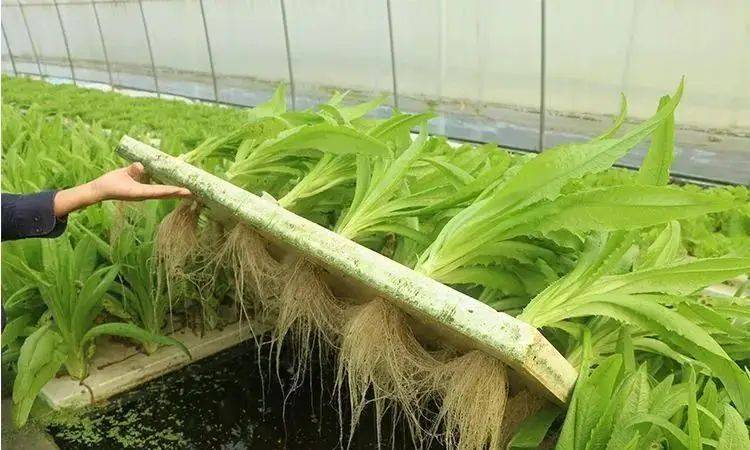
Vegetable planting time:
Summer vegetables such as emptied cabbage, silk melons and bitter melons began planting after late april when water temperature was above 15°c; and autumn vegetables such as western vegetables began planting after late october when temperature was above 15°c. Other vegetable varieties are grown according to growing season and suitable for growth temperature。
Proportion of area covered by fish:
Table of reference area of fish and vegetables grown in ponds
Simplicaty
Water-body agitation equipment
Be equipped with a specific facility to stir water bodies, facilitate water body flipping, allow for the full release of bottom sediment nutrients into water bodies, and provide nitrogen, phosphorus, etc. For plant growth。
This technology is suitable for all fine ponds throughout the country, especially old ones。
However, the following should be noted in the implementation process:
Vegetable cultivation should be diversified。
The floater shall be organized in a strip and may be moved as a whole in order to transform the waters and extract as required。
3. Timely harvesting of vegetables to avoid decay in vegetable water and subsequent growth。
4. Take care to raise awareness of the methods of production of aquatic vegetables and to increase the revenue from the sale of vegetables。
5. To enhance observation and monitoring of changes in water quality to understand the effects of implementation。
The “symbiotic” model can be either a large-scale production and demonstration model, or a small-scale front-house, or even an upholstery landscape. There is still much room for development of co-symbiotic technologies, both urban and rural。