Traditional patterns of vegetable cultivation are dominated by soil cultivation and the quality of the soil has a decisive impact on the growth of vegetables. However, more and more farms now use soilless farming techniques to grow vegetables in “water drinking”. This innovative form of cultivation not only saves land resources but also achieves efficient production. Through hydroponics, the production of single-season acres of vegetables can reach 2,500 to 3,000 kg, and can be harvested six to seven seasons a year, significantly increasing the production of vegetables. When you walk into a farm like this, you're going to see fresh celery flourishing in the water, greening and glamorous。
Zhou is working hard in a busy hut. The farmer, who came from tarshan town, three districts in sichuan city, chose to abandon his job in large cities in 2016 and to return to his home country to become an agricultural entrepreneur. After many years of market research and in-depth knowledge, they have found that shed cultivation has great market prospects. As a result, in 2020, they decisively contracted and built five greenhouses and introduced advanced hydroponic techniques, starting the path of hydrocel。
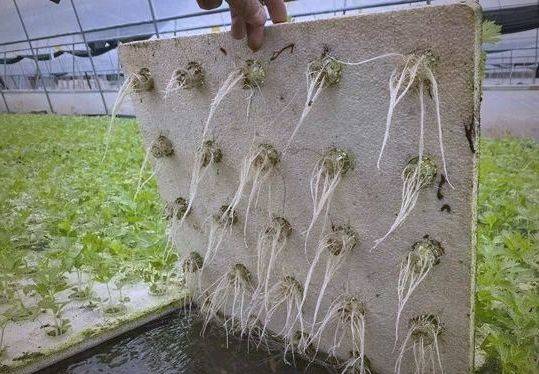
You'll be shaken by what you see. In more than a dozen well-ordered pools, white foam-growing panels floated, each with 25 round holes of ping-pong size. From these celery holes, fresh celery draws green blades that are dynamic and attractive. Zhou zhi zhi said that the high production of celery could be ensured if the temperature and light of the shed were managed。
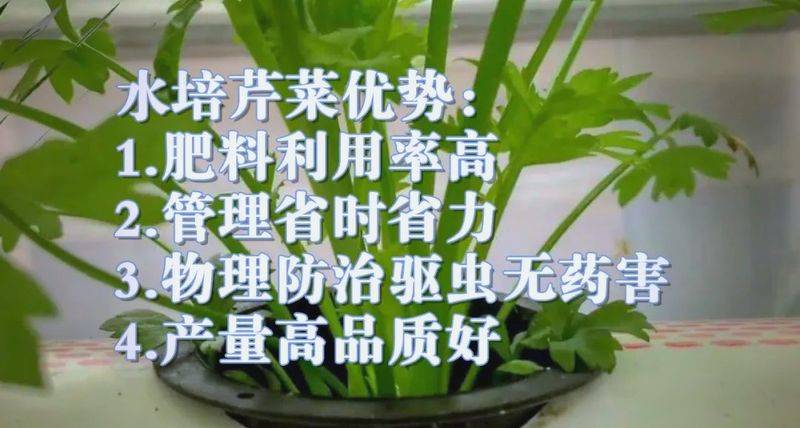
Aqueous celery has a significant planting advantage, growing six seasons a year and growing for only 40 days a season. This celery is not only hormonal-free, non-polluted, but also a public-friendly standard and of high quality. Zhou's water celery, at a price of $5 per kilogram, is targeted for sale to areas such as yingyang, chengdu and chongqing and is well received by local markets。
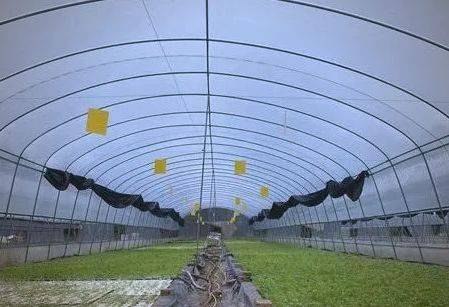
The promotion of hydroponic vegetables has been facing a challenge: high pre-investment。
In the case of the greenhouses, construction costs are often over $600,000, which discourages many growers. However, huang jibing, from kampong city, skilfully reduced the cost to only s$6-7,000, a breakthrough that has resulted in significant progress in the spread of hydroponic vegetables。
As early as 2017, intensive interest in hydroponic vegetables was generated when huang jibin was trained at the provincial agricultural institute. However, according to the provincial agricultural school model park standards, the investment of more than $600,000 in hot sheds on an acre makes extension difficult. In an attempt to find a way to reduce costs, huang jibing has tried to use traditional sheds for remodelling. Through his tireless efforts, he had succeeded in achieving efficient and low-cost cultivation of hydroponic vegetables, giving new hope to the industry。
The ideal growth temperature for aqueous celery is between 28°c and 30°c. However, the traditional general sheds are not able to meet this requirement because of the poor effect of the constant temperature. In the face of this challenge, huang jibing has worked tirelessly. He made an online search of information, visited vegetable plantations in the sheds and even consulted experts. Eventually, he applied thermal principles skilfully, raising the height of the traditional shed from 56 to 78 metres, thereby increasing the flow of air and making the temperature in the shed more stable。
In addition, huang jibin has pioneered a new method of bio-water celery throughout the province. In this way, he is able to take full advantage of the rich nutrients in the marshes and achieve secondary use of resources. However, there are very strict requirements for the allocation of trophic fluids and for the addition of strains to biobacteria. After 16 repeated attempts and adjustments, huang has finally found the right proportion of nutrients and increased the variety of bacteria to three, thus effectively addressing celery root disease, oxygen deficiency and poor growth。
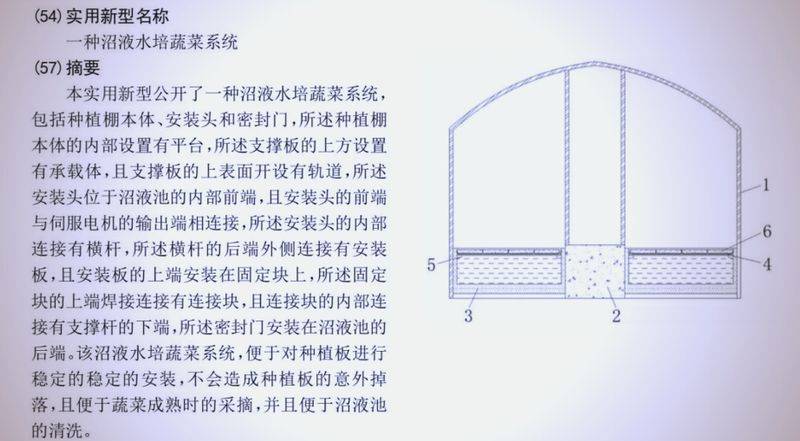
After nearly a year of deliberate seeding, huang jibing finally made a breakthrough in the core technology of low-cost, non-mobile water-breeding vegetables, significantly reducing the cost of investment per acre to only $70,000, a major breakthrough that resulted in leapfrogging the field. More notably, his bio-vegetative vegetable technology and the corresponding bio-vegetative vegetable sheds were awarded the patent certificates of the national intellectual property agency, “new practical techniques for bio-vegetative vegetable production” and “treatment for bio-vegetative vegetable production”。
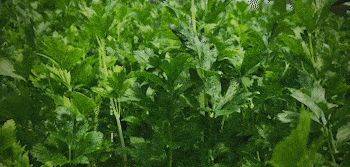
The production of celery, grown with hydroponic techniques, amounts to 2,500 to 3,000 kilograms per acre, a remarkable six to seven seasons in one year. By virtue of their outstanding quality, the celery is sold at $6 per kilogram, with a daily delivery of up to 1,000 pounds, and market demand is high。
Aware of the enormous potential of hydroponic vegetables, huang jibing has decisively expanded the scale of cultivation, gradually increasing nine varieties, including onions, emptied cabbage and green vegetables, from the original water herring. Today, he has expanded the sheds to eight acres, yielding more than 200,000 pounds per year. It is worth noting that the technology of bio-featation has matured, especially in the case of hydro-celium, which is growing well in the marsh, and even cleans up some of it, achieving a double harvest of economic and ecological benefits。
Vegetables from the marshes not only improved yields but also optimized quality. The abundance of mineral nutrients required for vegetables in the marshes, as well as a variety of growth-enhancing active ingredients, such as hydrolytic enzymes, organic acids, among others, have increased the growth of vegetables and significantly increased resistance to disease and cold. Vegetables that are bred with microgap water have proven to be significantly better in size, size and colour than traditional cultivation methods, while the incidence has been significantly reduced. For example, the production of oilseeds grown using bio-vegetation has increased by 64 per cent over conventional cultivation, and there has been a significant increase in nutrient content such as vitamin c and reduced sugar. In addition, there has been a significant increase in the production of vegetables, such as lettuce, and a significant decrease in nitrite content, which has greatly improved the nutritional and hygienic quality of vegetables。
The technical elements of the bio-vegetative vegetables include:
The installation of exposed gas tubes in hydroponic pools to regulate water temperature; extraction of biolamp-based fluids and adjustment of ph values to appropriate ranges; addition of appropriate nutrients and chinese antibacterial fluids to basic fluids; incorporation of nutrients into hydroponic pools, placement of drifting floats and planting of vegetable seedlings; continuation of nutrients after planting and development to maturity. Throughout the process, it is essential to maintain proper water temperature and daily exposure。
Attention to marshes and vegetables
First, marshes cannot be used directly for hydroponic vegetables. Before they are made into nutrients, they must be treated by filtering sludge and exposure gas, and the ratio of marshes to water must be strictly controlled. At the same time, attention needs to be paid to the proportion of the three elements, n, p and k, which are allocated in different concentrations according to different plant species. Usually, only a small amount of inorganic n is needed in the marsh, and other elements meet plant growth needs under suitable conditions。
Second, the methane extracted should be placed for more than three days before hydroponics to remove some of the reduced substances. Because of the large changes in the composition of the marsh, cultures need to be supplemented with elements based on the nutrient formulation used and ph adjusted to around 5-0 with 98% phosphate。
In addition, the use of marshes as soilless nutrients accelerates the growth of crops. Because it contains not only the entire inorganic components of artificially formulated nutrients, but also the nutrients conducive to plant growth, it provides more abundant nutrients for plants。
Finally, the marshes used to plant celery are typically 30 to 40 times diluted and treated with fertilizers, mainly to supplement nitrogen fertilizer. It is worth noting that, due to the wide variation in the composition of the marsh, its effects depend mainly on factors such as the type of fermented raw material and the fermentation conditions. Therefore, before soilless cultivation is carried out using a marsh, a component test should be carried out and appropriate nutrient adjustments should be made based on the characteristics of the marsh in order to optimize the effects of cultivation。