Jasmine's planting technique
Jasmine, also known as jasmine. Jasmine is green, white and fragrance, and is the most common aromatic pelvis。
Jasmine is an indian-arab region with a central production area near the persian gulf and is now planted extensively in subtropical areas. Mostly in iran, egypt, turkey, morocco, algeria, tunisia, as well as in countries along the mediterranean coast such as spain, france, italy, india and south-east asia. Athens, the capital of greece, is called jasmine. The philippines, indonesia, pakistan, paraguay, tunisia and thailand listed jasmine and the same sisters mammy and big fa jasmine as national flowers. South carolina in the united states is designated a state flower. During the season, the white jasmine sea was seen everywhere in the philippines, so that the whole of the philippines was fragrance。
Jasmine has a long history of entering the country, and the song poet, wang xuan, once wrote: “jasmine's name is even better, from buddha to china.” in the song dynasty's guang away from jasmine, it's written: “it's a great deal of flowers, and i'm asking you to be the champion of the flowers.” we were first planted in yunnan, and later expanded to guangdong and fujian to become the birthplace of our jasmine. To date, jasmine has spread throughout the country, with guangdong, fujian, suzhou, hangzhou and nanjing becoming the main productive areas. In recent years, shandong, beijing, tianjin, xi'an and others have also been active in the production of the plant jasmine. At present, my country, jasmine, accounts for 65 per cent of the world's total cultivated area, with the highest annual production of flowers。
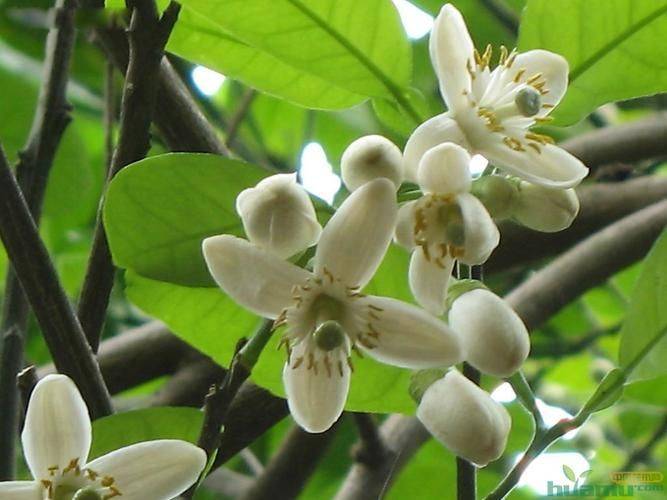
Jasmine is the usual green bush. Leaves to life, light, eggs. Sequences of chute, a few pieces at the top of the branch, flowers with hair, white and aroma, single petals, doubles and multiple petals。
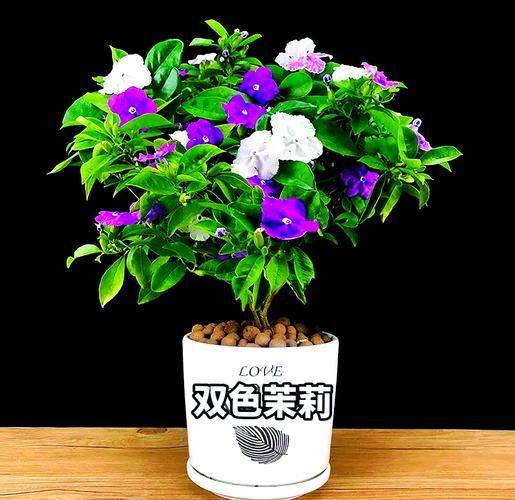
It's common for the same species to have a red beesianum, purple or red, aroma. J. Grandiflorum, white, smelly. J. Humille, flower yellow. J. Mesnyi, light yellow, half-heavy or heavy, fragrance. J. Mulflurum, yellow. J. Nitidum, white, light purple leaves, fragrance. J. Officinale, white, red and fragrance. J. Parkeri, small, yellow. J. Pollyanthum, white, delicious。
Jasmine was born in india, iran, pakistan and the arab states. Warm, humid and sunlight-rich environments。
Jasmine is more sensitive to temperature, adapts to high temperatures, insatiable to cold, and resistant to cold. At the temperature of 0°c, the light blades and the thin parts of the branches die, while the heavy branches die. Jasmine grew 25-35°c. Growing at below 10°c is extremely slow and even stops. 19°c can bud. Growth is slow below 25°c and buds are conceived at more than 25°c. At 30 - 40 °c, the buds are better developed, while 32 ~ 37 °c is the most suitable temperature for the buds to mature and open. More than 37°c flowers are open, but they are often yellow and smelly。
Jasmine's requirements for moisture are a strong growing season, a strong leaf, high evaporation and adequate watering, with a relative humidity of 75 per cent - 85 per cent. In the case of severe water shortages during the dry season, the effects on growth and budding, the blooming of flowers and their small size. However, excessive moisture in the soil can also lead to stunting, bad root and suffocation. The plant jasmine, especially during the winter, is too damp to cause bad root。
Jasmine is a radiant plant. Jasmine's growth and development is best in direct light. If there is insufficient light or shade, the jasmine leaves are thicker and thinner, the leaves are green, and they are stunted. The stronger the light, the more the roots of jasmine, the stronger the plant, the stronger the resistance。
Winds have a certain impact on jasmine's growth and development, with a large amount of water vapour in the summer, which increases air moisture and jasmine thrives. The west or north-west winds contribute to the decline in air moisture and temperature, the growth of the buds is stunted, flowers are often under-open and some of them turn to purple red. In the hot summer, the northern wind blows jasmine, causing the flowers to be white and fragrance, and the southern or eastern wind blows with a high evaporation volume, which causes loss of water and affects growth。
Soil requirements are most suitable in 6-6. 5 with loose, fertile sandy border soil. The pelvis shall be used as co-soils, ash or ash, or ash and ash, or ash, or ash, and ash, or ash, or ash, or ash, or ash, or ash, or ash, or ash, or ash, or ash, or ash, or ash, or ash, or ash, or ash, or ash, or ash, or ash, or ash, or ash, or ash, or ash, or ash, or ash, or ash, or ash, or ash, or ash, or ash, or ash, or ash, or ash, or ash, or ash, or ash, or ash, or ash, or ash, or ash, or ash, or ash, or ash, or ash, or ash, or ash。
It's a common practice for "reproduction methods" to be plugged, pressed and split。
In april-october, a mature one-year branch was selected to grow by cutting 10 centimetres, removing the lower leaf blades, at the top a pair of full leaf blades, inserting an equal amount of mud and sand into an interposition bed, covering plastic sheeting, maintaining a high degree of air moisture, healing about 20 days after the insertion, and then producing a green root, cutting at the top of the ear and abdomen with a bud, about 50 days after which the saps enter normal growth. It's the fastest in the summer and has a high rate of success, and it can bloom. With 0. 05 per cent of the solution of 吲哚butyric acid, the tube is impregnated with 3 - 5 seconds, and the treated plug is typically 15 - 20 natural roots, with a survival rate of over 90 per cent, and leaves are pumped for about 25 days. After growing into new plants, they enter normal management。
Staple reproduction: select a longer branch at 15 cm, preferably slightly injured in the lower part of the festival, buried in a sand-filled, mud-filled basin, humid, start rooting after two to three weeks, and cut off from the mother farm after about two months。
Divisional reproduction: every spring, a combination of shifting basins, cutting up the dense jasmine plant and cutting the roots and the upper branches of the ground。
The plant jasmine used to be 15-20 cm. Jasmine, fat-resistant, potty plants must be full of sunlight, which is what the flower proverb used to say about "mossy." otherwise, the sun is not enough, it is easy to grow, and leaves little leaves, affecting flowers. The jasmine branch is strong, and after spring changes, it's often choreographed. After the flowering period, it will need to be re-cut so that new branches can grow and flowers can flourish. It says, “jasmine doesn't trim, a small flower is obvious” and, “be strong, the flower is stable”. Fertilizers are applied once every half-month or with “friends” 21-7-7. Jasmine is very fat, and if it's not enough, it can cause yellow leaves. In the early stages of jasmine's pregnancy, 0. 2 per cent-0. 3 per cent urea was sprayed in the evening, with better effects on the development of the bud。
[pest and pest management] common albinism, brown spots, sprayed 800 times more with 65% of the dyssey zinc wettable powder. Pests are hazardous to leaf moths, red spiders and midshells and can be sprayed with 1,000 times more than 50 per cent of the raw cream。
Jasmine has a color, fragrance, pose, and all that rhymes. The plant can decorate the courtyard and the living room and be more poetic if it is planted in a piece. Jasmine also makes chest flowers, balls, lamps in gangnam。