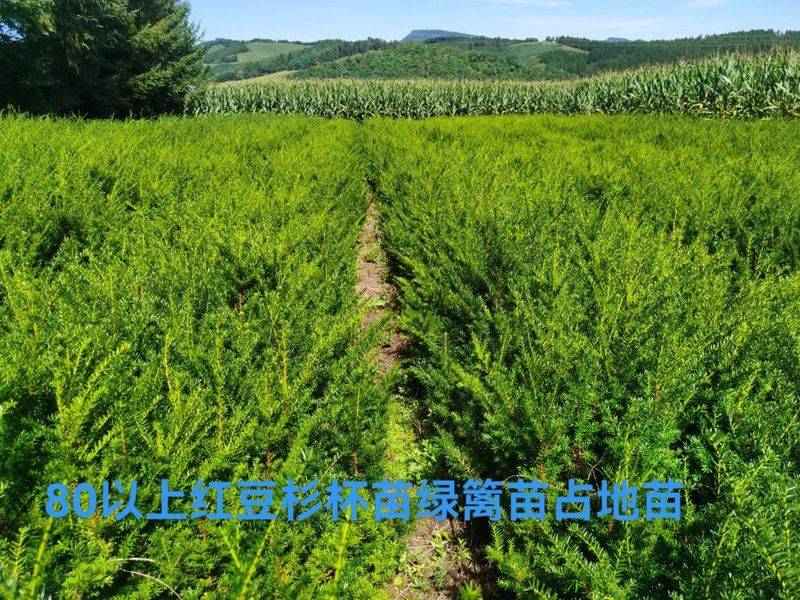
Let vegetable cultivation go beyond tradition to the wider world. Whether it is high roofs, deep oceans, deserts, and rich cities, vegetable cultivation can find suitable soil. Through innovative landless techniques, production per acre can grow alarmingly, or even several or dozens of times. There are now 37 different forms of soilless farming available for you to try and start a new chapter of vegetable cultivation。
Earthless cultivation: leading agricultural innovation towards a new era of green environment
Landless cultivation technologies have revolutionized the agricultural sector, breaking the limits of traditional soil cultivation and opening new paths to efficient and environmentally friendly agricultural development. This innovative model not only addresses the problems faced by many traditional cultivation methods, but also contributes to cross-cutting development in areas such as agriculture, horticulture and forestry. Whether it is urban beautification, the exploitation of desert islands, or the production of high-quality agricultural products, soilless cultivation offers vast applications。
The fact that the crew of the shengzhou 17 picked fresh vegetables in the “space garden” with their own hands made it possible to take them off-the-shelf。
On 20 july 2024, the wcpk mission, the `royal 06' ship, ushered in its historic `vegetable harvest'。
In qatar, china's team of soilless cultivation technology demonstrated an amazing achievement: their success in growing vegetables in the desert has globally declared new possibilities for desert agriculture。
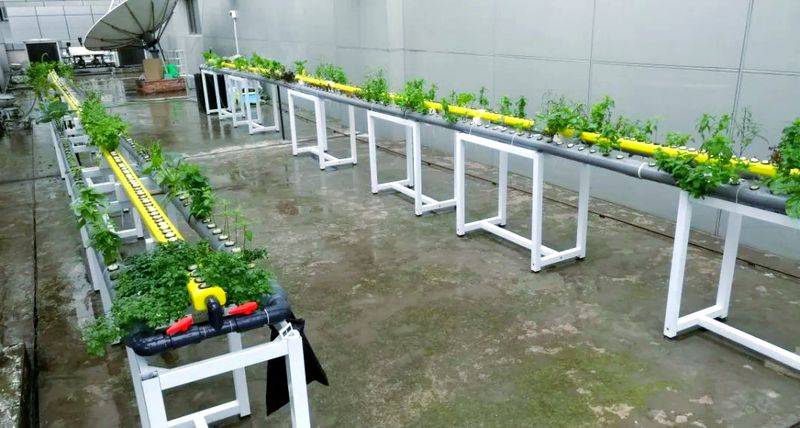
Innovative applications of earthless farming technology in urban agriculture - shanghai “aerial gardens”
Landless farming technologies are increasingly becoming an innovative practice in urban agriculture. In shanghai, a project called “air vegetable gardens” demonstrated the potential of this technology. Through the efficient use of urban space, the project has succeeded in creating a green garden on the roofs of high-rise buildings. This has not only provided urban dwellers with an entirely new life experience, but has also demonstrated the enormous potential of soilless farming techniques in improving the urban environment and promoting sustainable agricultural development。
Advantages and challenges of soilless cultivation technologies
Production rose significantly:
Production of soilless crops shows a significant advantage over conventional soil cultivation. For example, the production of four-season beans has increased threefold, with kale increasing fourfold, and cucumbers having increased threefold, while tomato production is two to twofold, and peppers are as high as 5 to 90 tons/ha. In addition, studies have shown increases in tomato, pepper and cucumber production of 34 per cent, 98 per cent and 83 per cent, respectively, in the context of base culture. The results of the tests were also remarkable, with a significant increase of 281 per cent in the production of hydrocreas compared to soil cultivation, and 39 per cent, 13 per cent, 176 per cent and 190 per cent, respectively, of the increase in leaf, celery, cabbage and spinach production。
Water conservation has had significant effects:
Landless cultivation techniques have also been successful in water conservation. This technology saves 50 per cent ~70 per cent of water compared to traditional soil cultivation; it saves 20 per cent ~25 per cent of water resources even compared to soil drip irrigation. More specifically, research shows that soilless cultivation requires only 46 kg of water per kilogram of production, compared with 400 kg for soil cultivation and up to 5 per cent for water conservation。
The solution to the obstacles to access is:
With the development of efficient facilities for vegetables, the problem of barrier to access to the facilities'soil has become more pronounced. However, soilless techniques provide effective solutions to this problem. Not only is the technology economically efficient, it can also completely address barriers to access to the soil of the facility, thereby safeguarding crop yields and quality. Despite the fact that our land is currently relatively low, its vast application prospects cannot be ignored。
3 major categories, 38 new and impressive patterns of soilless cultivation
Unearthed cultivation, an innovative technique for vegetable cultivation, has resulted in the efficient growth of vegetables by placing them in a soluble nutrient or using nutrients as nutrients on a specific planting matrix. It has moved away from dependence on natural soils and replaced them with nutrients rich in the elements required for vegetable growth, thus ensuring that vegetables can successfully complete their life cycle。
After decades of research and practice, soilless farming technologies have moved from research laboratories to commercial markets, resulting in modern methods. These methods can be broadly divided into hydroponic, aerosol and matrix cultivation, each with its specific planting conditions, applicable geographical areas and economic benefits. For example, foundational cultivation is relatively low in terms of cost inputs and technical difficulties and is also at a moderate level of efficiency, while hydroponic and aerosol cultivation, although more expensive and technically demanding, is correspondingly more efficient and productive。
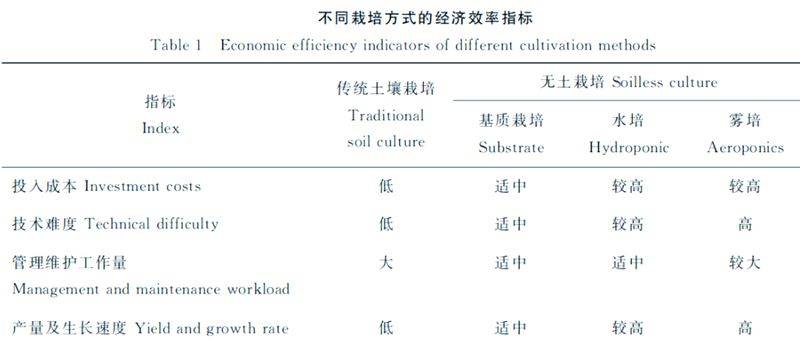
Table data from the chinese agricultural university journal
Exploration and practice of foundational cultivation
As an emerging farming technology, foundational cultivation has received widespread attention in recent years. By studying the principles, methods and effects of foundational cultivation in practice, we have been deepening our understanding of it and trying to apply it to actual agricultural production with a view to achieving higher yields and quality. At the same time, foundational cultivation faces many challenges, such as foundational selection and pest control, that require further exploration and resolution。
Substrate cultivation shows its unique advantages compared to conventional soil cultivation. It not only improved the production and quality of vegetables, but also saved water and fertilizers and reduced labour input. Despite the relatively high cost of initial inputs and the complexity of operating techniques for foundational cultivation, it is still characterized by less investment, simpler equipment and easier to operate than hydro- and fog-based technologies in soilless cultivation. Next, we will present a number of different types of matrix cultivation, including fruit and vegetable tidal irrigation matrix, multi-layer h slot matrix, a-frame matrix and cranium matrix. These approaches are specific and apply to different production environments and plant types, providing more options for agricultural production。
The permafrost plant consists of components such as “tube support skeletons, steel wire troughs, swirlless, black and white membrane, matrix and back-pipe roads”. It is unique in that there is no need to set up an extra scrawl of vines, which simplifys the management steps such as the bundling of chickens, chickens around them and chickens, while facilitating the regenerative cultivation of cucumbers. In addition, it can effectively contribute to the continuation of the effects of the fresh branches and simultaneously manage the temperature of plant roots and the coronary layer. Acupuncture is used in a variety of scenarios, including greenhouses, balconyes, commercial spaces, landscape design and tourist agriculture, as well as in the cultivation of small watermelons, melons, cucumbers, melons, grapes, fragrances and various species of cranberry grass。
Multipart stereocytal tray
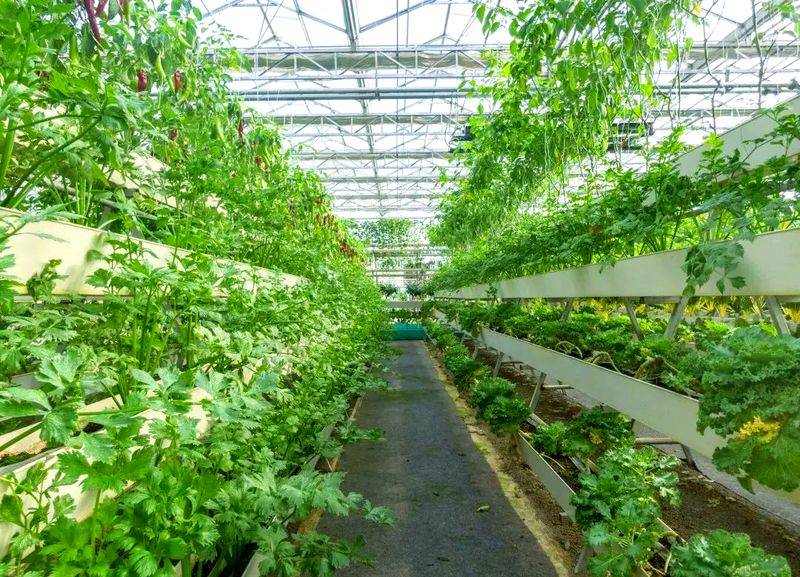
This method of cultivation has resulted in multilayered stereoculture, efficient use of cultivation space and the creation of a good stereo landscape. The two-depletion cells use matrix cultivation, with no tube cards at the bottom, saving space. Although the construction process is relatively demanding and costly, it provides the top with an environment suitable for the cultivation of eggplant and vines, while the bottom is suitable for the cultivation of vegetables such as celery, beet and lettuce. This applies to the production of facilities, the tourism of agricultural parks, the greening of cities and the display of agricultural science and technology。
Pedagogic stereoculture
This method consists of a four-storey fan-planting tank, each containing a number of sections, while the fifth layer is used for the planting of plant vegetables. Each layer is made of round steel, forming a cone tower-shaped planting structure. This approach has also achieved multi-layered stereoculture, efficient use of space and excellent holistic and landscape effects. They are particularly suitable for greenhouses, courtyards and tourist agriculture, where various types of cabbage and root vegetables are grown。
Collapse cell matrix cultivation
Using the pvc board, the shape can be adapted flexibly to actual space and demand, and construction is simple and inexpensive. The pvc material also has excellent durability, resistance to chemical and acid corrosiveness and resistance to ultraviolet radiation, which can effectively mitigate the problem of connectivity. This method of cultivation is particularly suitable for temporary exhibitions, scientific experiments and horticulture in the home, as well as for the planting of leaves, small-scale fruit and vegetables。
Alignable cell cultivation
Coconut matrix cultivation
This pattern of cultivation is the digging of planting cells under the ground, with black membranes and barbed wire and the filling of coconuts as a planting matrix. It is equipped with an automated irrigation system that allows for the recycling of nutrients. The simple operation of this method, with few investments and quick results, effectively prevents endemic diseases and is an efficient new form of cultivation. It is often used in the areas of facilities agriculture, research education and soil improvement, as well as in the cultivation of leaves, fruit, root, vanilla and flowers。
Pyramid matrix
This form of cultivation is colluded through different forms of foam cultivation to form stereoponic facilities. There are different numbers of planting holes or combinations of specially designed pvc tubes. It can make full use of planting space, increase production per unit area and adapt to multiple layouts. This cultivation model is widely used in greenhouse culture, tourism and research education and is applied to the cultivation of leaves, fruit, strawberries, blueberries, vanilla plants and flowers。
Rotation pillar matrix
This piping can be slowly rotated, thereby increasing plant exposure and time, saving space and increasing utilization of the area per unit. Its design is scientific and beautiful, increasing the sense of dynamic. It applies to greenhouse cultivation, tourism agriculture, home gardening, urban agriculture and research education, and to the cultivation of leaves, fruit, strawberries, blueberries, vanilla and flowers。
Pyramid matrix
The pyramid matrix is made up of planting basins, connector boxes, fixed screw nuts, inner support skeletons, and back-pipe routes. This method of cultivation is skilfully applied to the homogenization of existing greenhouse pillars, which not only beautify indoor pillars but also make full use of space. The planting box and the attached box are embedded in a fixed structure that allows the use of the pole to take shape independently, while meeting the diverse needs of the pillar vision. In addition, it can be accompanied by a three-dimensional greening of the walls, the outer corners, the inner corners, etc., and multi-generic monoculture. Its applications range from greenhouse cultivation to tourist farming, home gardening, urban agriculture and research education. At the same time, this method of cultivation also applies to numerous plants such as leaves, fruit and vegetables, strawberries, blueberries, vanilla plants and flowers。
This is followed by petal plumbing, which is made up of several petal plantations that are erroneously stacked through steel tubes and are customised as needed. This form of cultivation can effectively increase the use of light energy and increase the use of land area, while saving energy, space and scientific aesthetics can both hang and land. It is well suited to the production of vegetables in agricultural parks, as well as to the development of sightseeing farming parks and botanical gardens in urban areas, eco-cafés, family balconyes, etc。
In addition, there are many innovative cultivation models, such as stacking of bowls, vertical petal cultivation, greening of poles and chain-based wall infrastructure, which offer additional possibilities for modern agriculture。
A chain-coated wall-planting facility, designed for the planting slots, which are smouldered, chained up and down, and form a double-sided or one-sided planting wall through the axle tube. The facility is simple, integrated and closed, providing for the possibility of a wall-building configuration. Not only can it significantly increase land use and productivity, it can also provide flexibility in collating various plant patterns and stereoforms through the combination of different colours of plants and the shape of the planting walls. Such facilities are widely available in tourist agriculture, urban agriculture, eco-rehabilitation and commercial spaces, where vegetables, flowers and herbs are grown。
In addition, there are innovative cultivation models, such as super-tube wall matrix cultivation, modular wall infrastructure development and funnel matrix cultivation, which are also unique and offer more possibilities for modern agriculture。