The hunan daily newspaper's full media correspondent, bong young-sheng's apprentice, yang jian jian, correspondent, weikko lee jianwu
Seed card
Mixed rice is the result of our original world-class agricultural technology. The generation of hunan scientists has produced hundreds of high-yield, high-quality, multi-resistant hybrid rice varieties, which have contributed greatly to food security in china and the world。
[pretty]
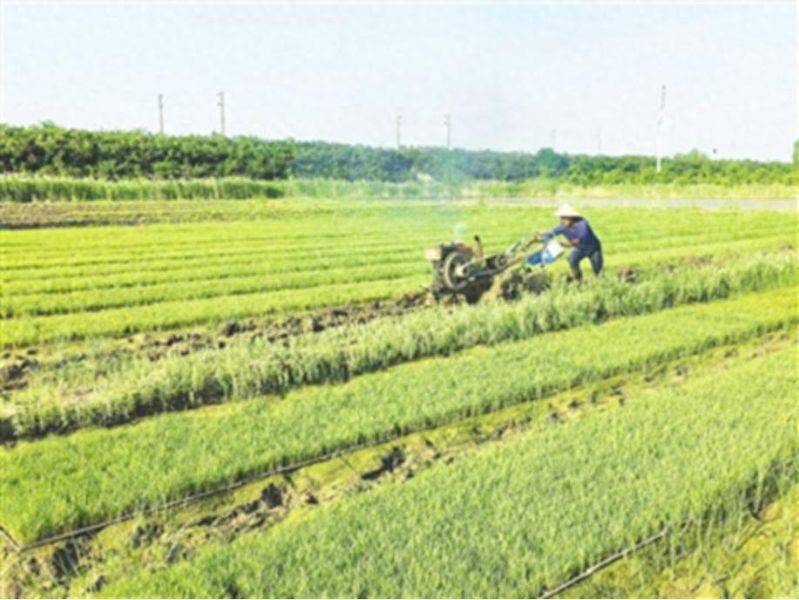
On 11 april, dong min fong, head of the fongri agricultural machine professional cooperative in yueyang county, led a visit to her plant. In the mud, a seed of mixed rice is drilling green leaves。
On the same day, the town of maaychi, on the outskirts of antananarivo, madagascar. In the rice fields of the farmer binza, the hybrid rice has been sown and is being soaked。
The same harvests and expectations are carried out by countries of different colours, a small seed of mixed rice。
A seedling from a pilot field at hunan river agricultural school is now taking root and growing flowers in over 70 countries around the globe. From high-yielding quality to green safety, mixed rice not only keeps chinese jobs firmer, but also makes more people around the world fed。
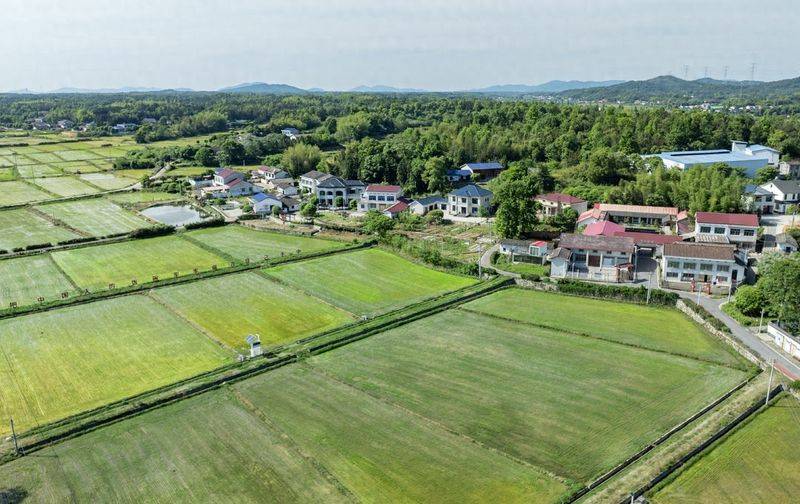
(on 4 may, the high standard agricultural land of the 100-recorded village of takahashi town, changsha county, with its green and strong seedlings, showed a dynamic and dynamic growth. The hunan daily newspaper's full media reporter
High-quality fish and bear palms
On 25 april, the city of changsha was able to resume the village. How widely do households grow the greenness of the mills: “these seedlings are all high-quality hybrid rice, meeting the demand of more than 3,000 acres of rice fields.”
The feeling of mixed rice seeds is complex. More than 20 years ago, his father planted three acres of mixed rice, a good harvest, but not a good taste experience to keep his memory alive. “it's particularly hard, `wood' is very hard to swallow with soup or white water.” more generally。
Ten years ago, when the land was flowing to grow itself, mixed rice production was high but unaffordable, and 100 kg of rice was more than $10 less than conventional rice. Ten years later, in 2025, 1,000 acres of high-quality hybrid rice were grown widely, producing one third higher acre than conventional rice, and 100 kg of high-quality hybrid rice sold 20 dollars more than conventional rice, a significant increase。
Since the successful development of the world's first hybrid rice species, south yu 2, in the autumn of 1973, high yields have become an eternal theme in mixed rice fields. However, mixed rice was once labelled as “weary but not delicious” because of its hardness, viscosity, the return of cold food and the poor smell of rice。
“the quality of today's high-quality hybrid rice is comparable to world-renowned brands and varieties.” the hunan agricultural university rector and director of the hunan mixed rice research centre, tang weng, are very confident。
On 26 march, the tangwen gang picked out a bottle with the tag “christ 2 plus 1751” from a pile of bottles filled with rice, indicating that journalists would try the grain's hand first and then try it。
Grab one and put it on your hand. After boiling in the pot, for about 10 minutes, the smell of rice sprayed in the room. After cooking, put a chopstick in your mouth, full of mouths, fine chewing, rice and rice, back and forth。
For the taste of the tongue, scientists have paid for “the strength”。
In the rice breeding community, there is a traditional perception that fish and bear palms cannot be obtained together because of their high productivity and quality. As early as the 1980s, breeding specialists had carried out high-quality cross-paddy control, but the multi-paddy seed was a very “fruitful” seed, with high yields and a decline in the quantity of rice, increased rice and reduced yields。
In 2013, along with advances in breeding techniques, hunan's hybrid rice breeder “new generation” formed a team on behalf of the tang wen gang to re-take the border。
“the main reasons that affect the sense of mixed rice is the high content of the rice chain starch, the rigidity of rice, the lack of fragrance, etc.” according to the tangwen gang。
From all over the world, the team selects thousands of quality parent and mother-born resources that are planted in test fields, during flowering seasons, and then picks out the herb's flower medicine for males, and then multiplies the flowering father's book, creating a collection of fine, fragrance and tasteful bones。
But this is only the first step. To achieve quality objectives, it is also necessary to target improvements in straight-chain starch content and taste parameters that affect the taste, which was the key to previous confusion among rice breeders。
“as the heavy ion beam mutagenic technology was applied to the breeding industry, the team found a solution to the problem.” pabin, a deputy researcher at the hunan center for multi-mixed rice research, said that exposure to high-quality bone bloodlines created with heavy ion beams (e. G. Carbon, cylindrium plasma) induced his own genetic changes, thereby reducing the content of straight-chain starch and increasing the salivability and taste parameters。
Ten years to grind a sword. The team succeeded in reducing the level of cross-paddy straight-chain starch from around 24 per cent to 18 per cent, as high-quality rice, raising the salivability and taste parameters by about 20 per cent. This drop has improved the sense of mixed paddy and increased prices。
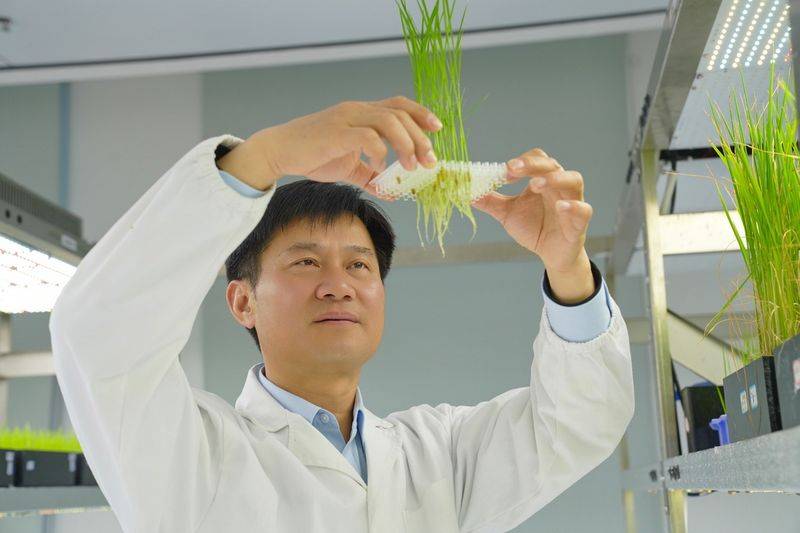
(on 26 march, the tang wen gang, president of hunan agricultural university, was conducting a rice study at the jaesan laboratory. The hunan daily newspaper's full media reporter
It breaks the cadmium barrier and gives chinese food and food
“this year, efforts have been made to promote 4 million acres of low-accumulation rice cultivation.” on 17 march, bronyang, a member of the chinese engineering college and secretary of the provincial agricultural school party, told the press at the provincial committee press conference “document no. 1”。
The bottom air comes from continuous innovation in the hunan plant industry。
In 2013, a cadmium crisis engulfed the lake, posing a serious challenge to the production of food in hunan。
In that year's central rural work conference, general secretary xi suggested that a seed could change a world, and that a technology could create a miracle requiring the development of good varieties with autonomous intellectual property rights to ensure food security at the source。
It was also during the year that the hunan provincial council and the provincial government resolved to take advantage of the province-wide agricultural research and to open up a system for the selection of rice varieties with low levels of cadmium. Barnyang was appointed as the lead scientist in the attack。
Rice is a natural radiant cadmium plant. The growing environment and soil conditions in most of the world's major rice-producing areas are similar to those in our country, and the problem of cadmium rice is not a problem in the southern part of the lake. Researchers in the field of agriculture around the world have been conducting related research for decades, but there has been no substantive breakthrough。
“the level of cadmium may vary if a large field is clapping, which is grown on the same species in the east and west, and if a pit is stepped on by one foot, which is the same species in and outside the field, there is also a low or high level of cadmium.” paronyang said that planting soil, irrigation water, etc. Could be a source of cadmium for rice。
“the seeds are agricultural chips, and the solution to the problem of cadmium is ultimately the seeds.” bronyang says。
Based on the customary thinking of hybrid rice research, at the outset, the clearance team began with a hybrid rice mix and recovery system (i. E., fatherhood). However, after each test, sample, and the cadmium levels were measured, the results were discouraging: they did not meet low cadmium and production requirements。
Cultivating hybrid rice requires a combination of father and mother, as do humans. When the study was in a state of difficulty, li li li ling, member of the team and vice-president of the provincial agricultural institute, said, "can't find low-cadmium seed resources in the father's book, is there any in the mother's book?"
This is the inspiration that found a breakthrough for the team. Starting in 2015, clearance teams collected more than 1,000 parent materials from around the world, planted in cadmium contaminated fields. In the autumn of 2018, the team discovered a low-cadmium watch-type parent-book material in the ziquis district. If you have the treasure, you will immediately take the soil contaminated with cadmium to the sun, at a suitable temperature, for repeated testing in the sea south。
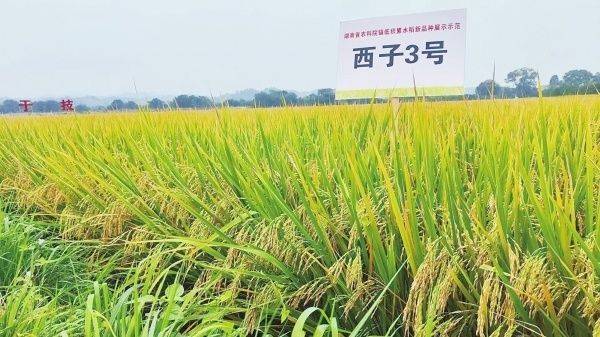
Four months later, the good news came: rice is being tested again, and the surface is still low cadmium! On the basis of this low-cadmium species, west 3 became the first nationally validated low-cadmium accumulated rice species in 2023. Subsequently, new varieties of low-accumulation hybrid rice, such as lotus and yuxiko 13, were successfully cultivated and will soon be validated by the state。
"catdium rice will be history in my country." bronyang says。
The research and development of rice, which accumulates at a low level of cadmium, not only feed the population, but also benefit farmers. In 2025, 300 acres of cadmium were converted from rice fields to low-accumulation rice by a large group of grain growers in the village of three street towns in togyang county, in the same way as other varieties, but 100 pounds of rice can be sold for an extra $10。
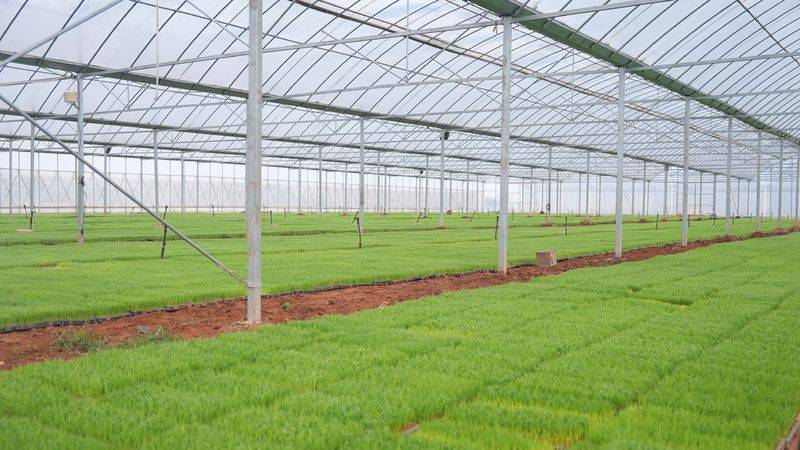
(on 21 march, the fonri agricultural co-operative co-operative co-operative, yueyang county, “photos”. Hunan daily's full media reporter, zou sang-chick, jody
Food for saline land can add 100 million acres of “good land” to the country
On 20 august 2025, the saline-resistant rice base, located in the village of doemmen, fukuyan province, produced an average of 707. 9 kg. The soil of the base, which is salty and salty, is located in the vicinity of 3. 5 per 1,000 inhabitants. The salt-resistant rice plant is the “two-size-fits-all” chosen by the hunan center for multi-paddy studies。
“the integrated use of saline is a strategic issue that must be placed high”. In may 2023, the general secretary of xi stated during a visit to hebeigu county that the development and extension of suitable saline crop varieties should be strengthened and the area suitable for planting should be effectively expanded。
“we have 1. 5 billion acres of saline, and if we can grow 100 million acres of saline-resistant rice, we can produce an additional 30 billion kilograms of food per year, based on an average of 300 kilograms of acre production.” according to burungyang, an additional 100 million acres of “good land” could be built for the country。
In 2013, the hunan mixed rice research centre began to nurture saline rice。
“the resistance of rice to saline is only known if it is planted on saline.” the minister for scientific research of the national centre for salin-salpha paddy technology and innovation has spoken of it. After multiple selections, they chose the test base on the gulf of sanyacca, where the heat is abundant and natural salt is found。
Salinous land is mostly unsophisticated. The base on the edge of the bay of cliffs was also initially a wasteland, with soil dominated by sand and soil, with no water, no fat, and very poor. "the hardest part is the pre-depression." it is said that sleeping in tents and eating instant noodles is “home-to-home” and that there are particularly many mosquitoes on the ground that are salted, working all day long, full of mosquito-tinked “packs”。
Payin' back. The former “no-crop land” has now become the world's leading platform for the identification of salty outdoor rice resistance. The salinity and rainwater of each small cell at the base can be accurately controlled to ensure the accuracy of the test data。
Henan is not the first, but the fastest, research on saline rice. Scientific research on saline rice has been under way in the country for decades, but progress has been slow, owing in large part to the difficulty of controlling the salinity of open fields and the control of indoor salinity, which affects rice development。
“the completion of the test base has accelerated the saline-resistant rice breeding process.” it is said that it takes half the time of the year for a group of hunan rice scientists to grow here and that more than 20 scientific institutions across the country have sent their saline-resistant rice varieties here for growth testing。
In addition to the platform, advanced breeding techniques for the confluence of rice in hunan have reduced the development time for saline-resistant rice。
On 30 march, scientists were using high-throughput genetic styling equipment to screen genes that were favourable to breeding in the laboratory of the hunan centre for mixed rice research. The “medical examination” report came out of a rice “twice” from more than 10 instruments and the data were clear。
With both platforms and technologies in place, researchers at the national centre for salin-salin technology innovation, like “hospitals”, have successfully developed a number of salin-resistant hybrid rice varieties, such as “twisher” and sanya。
The saline beach is painted as a good field and the saline paddy smells. This ambitious vision is expected to become a reality。
[expert comment]
Mixed rice benefits the world
Tang weng (rector, hunan agricultural university, director, hunan centre for multi-mixed rice research)
From the trimester to the dichotomy, after decades of scientific warfare and an iterative escalation, mixed rice has always been the leading global rice breeder, achieving the goal of “one-size-fits-all”。
The development of new varieties of mixed rice from generation to generation has both increased production and achieved a balance between high production and quality. The growth of resistant, disease-resistant, green-efficient hybrid rice varieties has led to a green and sustainable development of rice cultivation, reduced agricultural production inputs and integrated economic, social and ecological benefits。
Scientific research on hybrid rice breeding continues. In the future, it is important to keep pace with the real demand for production, to improve the production technology system, to develop groundbreaking varieties that are easy-to-use and easy-to-cultivate, wide-ranging and resistant, and to allow china's hybrid rice technology to continue to lead the world and contribute more to global food security。