


Hello, i'm a friend of yours, coop, a troubled old chemical industry gun, focused for years on helping structural engineers find suitable engineering plastic solutions。

"stastic storage net."

A one-stop platform for specialized engineering plastics, special plastics, modified plastics, titanium metal selection, manufacturing, service queries, etc., to welcome private correspondence, and we will provide you with quality services
Today, the mini-coding will take as its starting point the two processes of linear and underwater cutting, and will provide you with an analysis of the seven cutting problems that are common and the corresponding solutions, as well as some advice for the continued production of high-quality products on your cutting line。
The grain problem
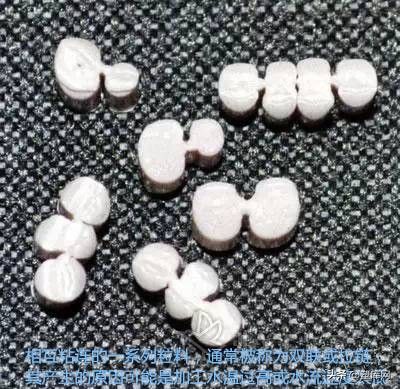
Cyclops are situations in which a series of particles are interconnected, i. E., in some cases, particles are connected to each other either by facing the end of the thin membrane or by cutting. During the process, several process problems may lead to this phenomenon alone or jointly. For example, the hotness of processed water is one of the causes of co-particleing, [know more of the trades of `plastics', `engineered plastics', `modified plastics', `mixed materials', megamaterials, cases of over-selections, downside efficiency programmes, and welcome online searches of the plasticsnet! In this case, water temperature should be reduced to give the particle surface sufficient iridium cooling; in addition, the low flow rate is a cause of the conjunction, which leads to the slowing down of the particle-cutting chamber and thus to the reunion of particles. In addition, if the porosity of the mimic is too close, export expansion during processing will cause particle contact, the solution being to replace the existing mimics with large space-spaced and small holes。
End-of-pipe problem
Tow tails are to be found on the edges of particles that are somewhat prominent and cut like a hockey pole, which looks like a contaminant at the bottom of the cut or a torn object. This was due to the fact that the cutting device was not able to cut in the present place. In general, the correct cutting of particles from a nematode cutting machine should be a straight-angled cylindrical column, and the positive grain from a underwater cutting machine should be an almost perfect spherical form。
Often, material that is not easy to make ends meet can also produce end-of-life effects. Assuming that all the processing parameters have been examined, [more knowledge of the industries of `plastics', `engineered plastics' and `modified plastics', super-material tables of mass materials, over-selection cases, downscaling of efficiency options, and welcome to the web-wide search of the plastic stores network!!!!!] the tails are generally diagnosed as cutting. For liner cutting lines, the solution would be to replace rollers with bottom knives to provide fresh and sharp blades; or to re-establish the distance of the equipment according to the values specified in the manufacturer's manual. For underwater pellets, templates and blades need to be checked to ensure that there are no marks, as scratches and ditches often cause drags。
End-of-life problem
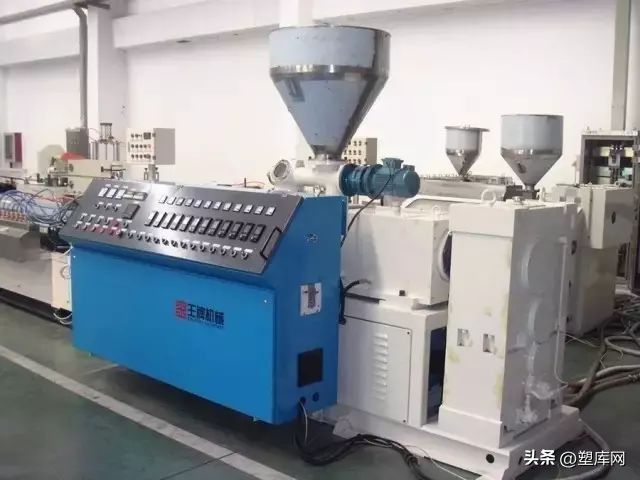
For many crystallized materials, such as general polystyrene, the end of the material appears to be a common and unique hazard. They are problems faced by processors because they change the volume density of the material, degrade or burn in the extruder cylinders, and cause problems in the transport process. The main objective of resin producers is to produce a single particle shape, i. E., with a given length and diameter, without contamination from the end of the material or from external substances。
To address this problem, the end-of-life mitigation can be achieved by adjusting equipment and controlling some important process parameters. When it enters the cutter, the temperature of the wire production line should be as close as possible to the point of softening the material to ensure that the line material is as hot as possible and thus does not break。
For specific polymers, the selection of rollers with appropriate particle angles plays an important role in reducing the end of the material. For unfilled polymers, stellite or tool rollers should be used as much as possible and the edges of rollers and bottom knives should be kept sharp to avoid breaking polymers. For follow-up equipment after cutting, air should be avoided, whether by pressure or vacuum。
For underwater pellets, it is important to ensure that sufficient pressure is maintained during processing to hold the mirror, and that the length of stay after the pellets are appropriately adjusted to ensure that the particles are hot as they enter the dryer。
The bottom cut
The bottom blade of the cutting device is a hard carbide piece of steel, welded with infra-wall alloy in its proper position, enabling it to be installed on the slabs through screws, [more knowledge of the industries of `plastics', `engineed plastics', `modified plastics', `mixed materials', mega-materials, cases of over-selections, downscaling efficiency programmes, and welcome a full-web search of the plasticsnet! As a rule, when the blade turns, it breaks down, and appropriate measures can be taken to avoid this problem, which needs to be done carefully in accordance with the approach recommended in the manufacturer's equipment manual. Here's one thing that needs to be stressed: a screwdriver ingwa alloy core. The rod is fixed through silver welds and has a cut-off limit, which can be easily damaged by excessive rectangles when installed. In addition, in rotation or installation, the broken bottom knife is susceptible to displacement and will disperse in the particle-cutting machine, damage the roller blade and increase maintenance costs。
Shrink gaps
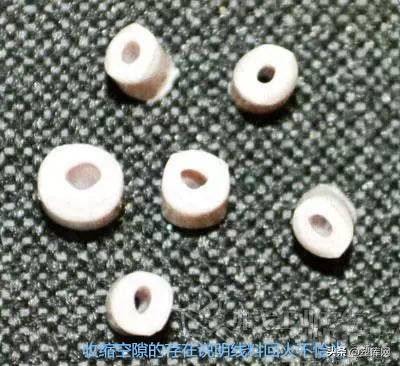
Shrink voids and hollow particles indicate an inappropriate return fire of the wire. It may be a small pit on the end of a particle at a slight loss, while at a serious time it may produce hollow particles, as in the case of wine bar, where the core temperature of the wire is close to melting, and it shrinks as soon as it is cut. The temperature gradient of the interface is constant and is not responsive to the cooling medium (air or water) when it is cut。
The specific reason for the contraction is that, when processed water is too cold for specific polymers, the outer layer of the fabric freezes, creating a hard shell, [more knowledge of the industries such as `plastics', `engineered plastics', `modified plastics', `mixed plastics', `mixable material', ultra-multiple selection cases, downscaling efficiency programs, and welcoming a web-wide search of the plastic storage network to understand!], leaving the heat in the thread core; and, in addition, the lack of sufficient impregnation time in the air or water, which prevents the heat of the thread core from moving to the surface of the line, thus preventing a good cross-section from cooling。
The particles produced by underwater cuttings also have condensed gaps due to the presence of trapped volatilizers in the melt, and an effective preventive measure is to check the vacuum hole on the extruder。
Thread drift problem
Linear drift is the predisposition of the liner cluster on the feeding platform, which can lead to poor material mass, fine strips and process disorders. If the particle cutting plane is not parallel to the extruder squeezing template, the line will tend to be crowded to the left or the right, eventually leading to the line drifting. In addition, other reasons for the drift of the threads include the irregularity of the gap between the bottom feeder and the razor, and the inconsistency of the diameter of the bottom feeder。
Thin control problems
The long bar is an unusual type of product produced by a particle-cutting machine, whose length, by definition, is longer than that of a conventional particle and the size of which usually varies within a few inches. The emergence of long strips (also known as oblique cutting particles) suggests wire feeding. The liner attitude at the time of the roller is not well controlled, specifically because the liner is not at a vertical angle at the time of feeding the roller, and therefore, at the end of the liner cutting, there is a tilt angle。
The distance between the ingestion (bite entry point) and the roller (cutting point) is referred to as the pressure distance, and there is nothing to control the wire at this point. A particle cutter is different from a wooden slab, and if it is not properly installed or in poor condition, plastic wires will not be fed to cutting devices from a vertical angle, [more knowledge of the trades such as `plastics', `engineered plastics', `modified plastics', `mixed materials', mega-material tables, cases of over-selections, downside efficiency programmes, and a full-web search of the plasticsnet is welcome! As a result, the threads began to intersect, causing further deterioration in the quality of cutting and eventually causing serious problems. Cross-cutting wires will force the two feeding pads to separate each other, causing them to lose tension, which in turn will lead to the temporary drop of the threads, which tends to be on either side. Early warning signs of the above-mentioned problems are the poor state of the feed, the presence of troughs, cracks or colour variations (aging or hardening caused by heat)。
Other common problems in the control of wires include: wear and tear, which causes loss of pull; and incorrect wires. Fire processes, which will result in wires bending as hard as snakes; and worn wire templates, which will produce various types of wires with different diameters. Moreover, manufacturers are wary of extremely worn rollers and the bottom knives that hold the wire, because the bottom knife is responsible for pushing the wire to the cutting point and preventing the cutter from operating at super-high-turn speeds, which cause the thread to swing。
In the underwater particle cutting system, the main reason for long strips is that, because of the mismatch between the speed of feeding and the speed of the cutter, there is a need for an increase in the speed of the cutter to match the speed of feeding or a reduction in the rate of feeding to match the speed of the cutter. In addition, during the process, it is necessary to ensure that the cutter has sufficient blades on its head to ensure that the particles have the correct geometric shape and to check for any trace of slow motion or blocking of the polymer flow。
[know more about the `plastics ' , `engineered plastics ' , `modified plastics ' , `mixable material', over-selected material cases, downscaling efficiency programmes, and welcome to the plastic storage network!]

If you need material selection services at work, you can contact us at any time。
More selection proposals, product design deficiencies solutions, material material tables, welcome access to @pestellnet。



