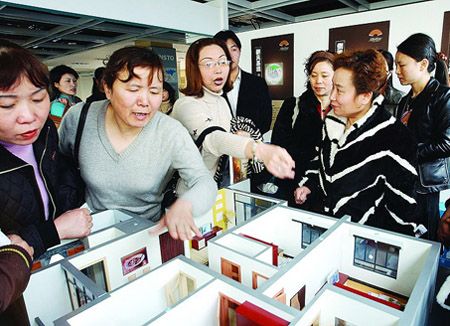
In recent years, according to xinhua's “new international” weibo, the wealthiest segment of the country has been expanding, investors have targeted the opportunities of the yen devaluation, the natural environment and the quality of housing in japan, many chinese have gone to japan to buy real estate, and even a tax firm has emerged to serve chinese owners. In an interview with xinhua news agency (sinhua) journalist, prof. Yumei, university of circulation science, japan, said that in recent times there had been a marked increase in chinese clients buying real estate in japan, and japan welcomed those investments。
Ms. Deng, from japan, said that the recent news that chinese people had bought land and houses in japan was mainly due to the fact that japanese buildings and land were sold together and that they could be left to their children as long as you did not sell them, which was very attractive for chinese properties with only 70 years of tenure。
The chinese bought a japanese house and were happy to earn it, and the japanese were happy to revive the economy with chinese money. Is this really a win-win? Chinese investors. Do you see the risks in japan city
[taxes and taxes, are you clear
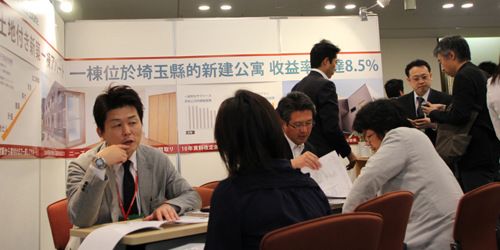
Japanese housing prices are somewhat competitive with those of front-line cities in china. For example, the area of the journalist's residence, hebei, belongs to the first class in tokyo, but a three-storey building opposite the site, with land, amounts to 76. 8 million yen (jp 1, approximately rmb 0. 052). Second-hand houses and small-house types in tokyo, even in urban centres, can be purchased for only 20 million yen. In other parts of japan, chinese people are involved in property, and even hokkaido, a thousand-year-old city, has developed a single villa for chinese people, with a set of yen20 million, which is sold once it has not been completed。
However, the costs of buying real estate in japan, which have been accompanied by costs, are not the same as the chinese properties that are bought once and for all. In addition, preferential policies such as loans and tax deductions for the purchase of personal property by local people are not generally available to foreigners in japan。
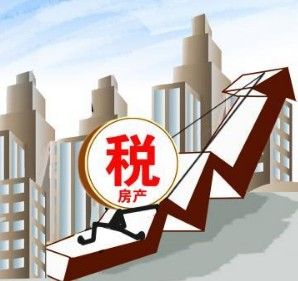
The director-general of the chinese news agency kang dechun, founded by the chinese diaspora, stated that japan pays taxes not only on land, housing and other fixed assets when acquired, but also during occupation and during the sale of transfers. In japan, the “fixed assets tax”, which is levied annually, is paid together with land. Tax rates vary considerably depending on the region, and there are also cases where the unemployed have to sell real estate because the land is very expensive and their incomes are not taxable because of the high cost of the land, as well as in the tokyo metropolitan areas such as hebei and platinum。
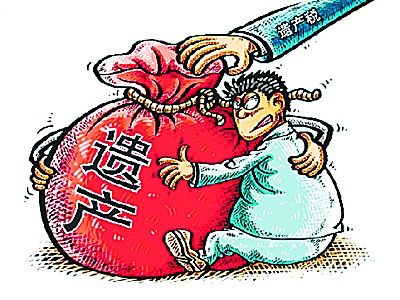
In addition, there is a very high inheritance tax on real estate in japan, and the families of today's queen misako have mortgaged property as an inheritance tax. According to kang dechun, japan has a higher rate of inheritance tax than european countries, slightly lower than the united states, and property is largely lost by grandchildren. This is the important reason why private japan has no land tycoons and real estate tycoons, so there is a term of “three generations of property”。
The tax rate for the japanese estate tax is determined by the size of the property, the higher the tax rate for the additional property. Inheritance tax rates of less than 10 million properties are 10 per cent, less than 15 per cent, less than 50 million are 20 per cent, between 100 and 200 million yen 40 per cent, between 200 and 300 million yen 45 per cent, between 300 and 600 million yen 50 per cent and above 55 per cent. According to japan's current inheritance tax, chinese came to japan to purchase large amounts of real estate, which, after several years, amounted to contributing to japan's national treasury。
In summary, japan has the following taxes and charges for the purchase of real estate: 1. When buying real estate, it pays a one-time transaction tax of 4 per cent based on the transaction price of the fixed assets (lower for its own use, 3 per cent); 2. Registration tax (one-time); 3. Stamp duty (one-time) for real estate transactions; 4. Heritage tax and gift tax. With the exception of some care for spouses and children, the tax rate is higher at a maximum of 55 per cent (one-time); 5 and the fixed assets tax (paying annually) is 1. 4 per cent of the market value: 6 and, in the case of real estate transfers, for less than five years, the income tax and the resident tax are 30 per cent and 9 per cent, respectively, and for more than five years, 15 per cent and 5 per cent。
You're thinking about saving up
It is difficult to achieve this in japan if there is a desire to buy a house to save value or to fall back. First, there is a high rate of depreciation of houses in japan, and small buildings in a single house are generally woody structures, with value equal to zero in 20 years. In the case of apartment buildings, the depreciation rate is slower, but is generally subject to a major overhaul for 10 years, which is paid for by the owner. If the dwelling is 50 years old, the owner will decide to rebuild after consultation. How to buy a house? It's hard。
As a result of various taxes and fees, the profit from rental of houses is not encouraging. Ms. Deng pointed out that the cost of maintenance of real estate in japan was considerable and, in the case of buildings, management was not low。
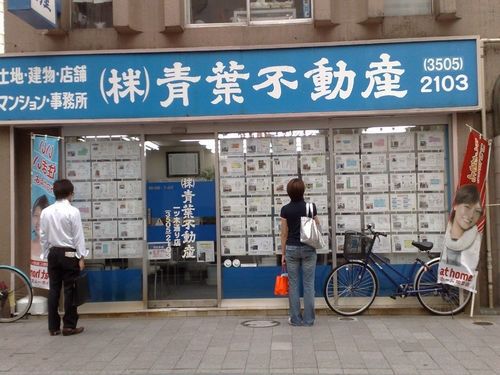
Kang dechun said that he knew an elderly american-taiwan who had purchased a property in japan for 45 million yen in order to preserve value and add value, but had rented the house for five or six years without knowing the actual situation in japanese society, and had lost more than 4 million yen. In particular, the last tenant, acting in accordance with his experience in the united states and taiwan, engaged in two lawsuits against the tenant, which resulted in a total loss, damages for litigation and an additional $1 million in removal costs。
Japan's firehouse fever had long ended, and it would often be a loss to see beautiful houses in the photographs and buy them without fact-finding. Even in tokyo, even in the immediate vicinity, the living environment is completely different. In some extremes, the difference between the north and south of the station and between the river and the west is more than double。
You buy everything
The high level of earthquake in japan and the threat of damage to real estate represent a particular risk. As a result, the damage caused by earthquakes, tsunamis and volcanic eruptions will not be compensated if the real estate of japan is not fully purchased. There is, however, a problem of capping compensation even in the case of earthquake insurance. All of this needs to be considered carefully。
In addition, a careful investigation into the legality of the building must be conducted in japan, and some of the attendant risks need to be considered. For example, on 17 november 2005, the ministry of land and communications announced that the first-level architects of the sister architectural design firm in chiba county had forged seismic data on the building. When the problem came to light, the building he designed was demolished. If such immovable property is purchased, the suffering can only be swallowed by itself。
Jiang dechun particularly warned that, with the rise in china’s power and the build-up of domestic hostility towards china, chinese have raised a number of questions and objections among the local population about the land they buy in japan, even when extremists believe it to be an invasion of japan. It is also interesting to note whether large-scale real estate projects purchased by the chinese will be the object of harassment by conservative citizens’ groups. (sinhua international client journalist blue, editor zhang xin; photo from the web)
Chinese people go to america to buy a house: investors love independent houses, young people love apartments
Chinese american house buying truth: 7 adult investment losses, migration difficulties