


The director of the strategic planning division of the national intellectual property agency has newly indicated that the focus will be on five “discretion cards”. An in-depth study of the system of data intellectual property rights (iprs) and an exploration of rules for the protection of intellectual property rights (iprs) for data to be constructed in order to ensure that effective iprs govern digital economic development。
In the 14th and 5th period, the direct annual value of our geographical marker products was nearly rmb 1 trillion
It was further indicated that the work on intellectual property during the “155” period would insist on economic construction as a means of effectively transforming intellectual property rights “intangible assets” into “physical wealth” for high-quality economic development. In short, the focus will be on five “special cards”。
The first card is the painting of the "innovation economy" gold sign. Patents are an important indicator of the level of innovation. The national intellectual property authority will continuously improve its patent policy to ensure the timely and effective protection of major scientific and technological innovations. Normalization promotes patent conversion, boosts the quality of patents and strengthens policy incentives for two-way growth, promotes more scientific and technological results from laboratories to industrial chains, and provides important technological supplies for the development of new quality productivity。
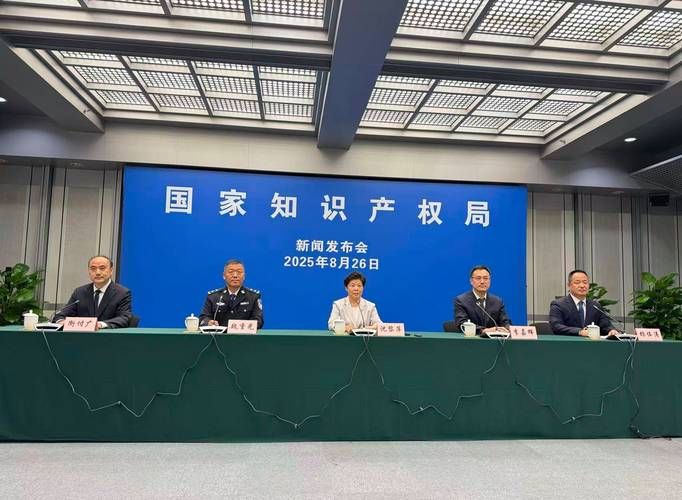
The second card is a “brand economy” growth point. Trademark brands are permits for enterprises to compete in the market. In recent years, our country has made great strides in branding, with yet another wave of internationally popular national brands that have become global “crunches”. The national intellectual property authority will continue to strengthen policy guidance and foster more well-known brands with international influence. Better use of the combined effects of various types of intellectual property rights, such as trademarks, patents and so forth, and the creation of more chinese brands that rely on patented technology。
The third card is to ignite the smoke of the “specialty economy”. The geographical marker is the bridge linking green water and silver mountains. During the “1405” period, the direct annual value of our geographical marker products was close to rmb 1 trillion, which played an active role in absorbing rural employment and boosting farmers' incomes. The national intellectual property agency will continue to strengthen the protection of geographical indications, promote high standards for the construction of national model zones for the protection of geographical indications, integrate innovation with the business community and develop new scenes, promote the organic integration of geographical indications with the development of niche industries, the construction of eco-civilization, historical and cultural heritage, and contribute better to the overall revitalization of villages。
The fourth card is the new underpinning of the “digital economy”. Integrated circuit chart design is closely linked to digital economic development. The national intellectual property agency will continue to strengthen intellectual property protection in integrated circuits by implementing the newly revised integrated circuit chart design protection regulations, which will help the relevant industries to do more. At the same time, an in-depth study of the system of data intellectual property rights (iprs) explores the construction of rules for the protection of intellectual property rights (iprs) for data, with an effective dip law to protect digital economic development。
The fifth card is the creation of an “open economy” environment. Intellectual property is a “common language” for global economic and trade cooperation. The national intellectual property administration will continue to strengthen its research on the legal regime and policy environment for intellectual property rights abroad and continue to refine the system of guidance for dealing with intellectual property disputes abroad so that chinese enterprises can travel to the sea. At the same time, deep convergence with the standard international economic and trade rules, adherence to equal treatment and protection of intellectual property rights of domestic and foreign enterprises, and enhanced cooperation with the intellectual property rights of major trading partners have been instrumental in creating a market-based, rule-of-law, internationalized and first-class business environment。
Continuous improvement of patent screening standards for new and emerging industries, such as ai+, smart, brain interfaces and future industries
The “fifty five” plan outlines the deepening of the expansion of artificial intelligence plus to empower economic and social development and governance. How can the benefits of artificial intelligence be harnessed in intellectual property work to promote dual-way empowerment of intellectual property and artificial intelligence
The “fifty-fifty-five” period, according to riving phu, was a critical period for accelerating the development of the digital economy, and artificial intelligence, as a core engine of growth, and the two-way enabling power of intellectual property rights, was both a necessary requirement for industrial development and an important practice of service innovation. Intellectual property-related sectors have set out a two-way mandate for the empowerment of intellectual property and artificial intelligence, and have actively promoted their development and integration。
On the one hand, innovation in the intellectual property systems associated with artificial intelligence is being continuously promoted. In-depth research on theoretical and practical issues such as patentability of artificial intelligence products, subject-matter applications, protection of objects, and so forth, and timely revision of the guidelines on patent applications for artificial intelligence-related intelligence, continuous refinement of patent examination criteria for new and emerging industries such as "advisible intelligence+" and brain interfaces, and enhanced system safeguards for patent protection for innovation. To improve the regularization and updating of the list of goods accepted for trademark registration, to proactively help the artificial intelligence industry to prepare its trademark registration applications and to develop the escort industry。
There are currently over 900 publicly accepted commodity service projects involving new industries, such as artificial intelligence, big data and so forth, which have been updated. Optimizing public intellectual property services around the core technology of enabling artificial intelligence, providing early warning of patent analysis, helping to clarify direction and reduce the pre-study cycle. Directing the building of patent pools in the field of artificial intelligence to promote more high-quality patents from laboratories to industrial chains to enable the development of related industries。
On the other hand, there is a continuous drive to enhance the efficiency of ais efforts. To expand the deployment of large models of artificial intelligence in the area of intellectual property and to enhance the application of artificial intelligence in areas such as intellectual property review, protection, application, service, management and security. Continuously optimize the upgrading of artificially intelligent patent-aided trademark review systems and improve the accuracy and responsiveness of review searches. Increased use of artificial intelligence in areas such as administrative enforcement, administrative decisions, capacity for online identification, real-time monitoring, risk warning, source traceability, etc. Use artificial intelligence and big data technology to continuously match universities, high-value patent screening of scientific institutions and matching of enterprises and normalization of patent conversion。
In addition, the national intellectual property agency will be deeply involved in international cooperation on intellectual property rights in the field of artificial intelligence, and will participate actively in the construction of relevant international rules, technical standards and governance systems to promote the betterment of artificial intelligence technology for the benefit of all。
Daily economic news



